Table of Contents:
- The Rise of Sustainable Dental Care: Why Choose Tablets?
- Fluoride vs. Non-Fluoride Toothpaste Tablets: A Comprehensive Comparison
- The Effectiveness of Toothpaste Tablets: Cleaning Power and Oral Health Benefits
- Taste Test and Texture: A Personal Experience with Different Brands
- Beyond the Tablets: Completing Your Eco-Friendly Oral Hygiene Routine
- The Environmental Impact: Reducing Plastic Waste and Sustainable Packaging
- The Cost Factor: Comparing Tablets to Traditional Toothpaste
- Frequently Asked Questions (FAQs) about Toothpaste and Mouthwash Tablets
1. The Rise of Sustainable Dental Care: Why Choose Tablets?
For years, I’ve been a fervent believer in minimizing my environmental impact. Recycling, reducing my consumption, and seeking out eco-friendly alternatives have become ingrained habits. But one area I felt was particularly lacking in sustainable options was my bathroom cabinet. Those plastic tubes of toothpaste? A constant source of guilt. That’s when I discovered toothpaste tablets, and my journey into the world of sustainable oral hygiene began.
Buy Toothpaste & Mouthwash Tablets. Enjoy 75% OFF - Limited Time Offer
Toothpaste tabs
Fresh Peppermint (With Fluorid)
$510
$
350
Only 2 units left on our site
-
Flavor: Fresh Peppermint
-
Quantity: Approximately 2500 Tabs
-
Fluoride: With Flourude-1440ppm
Sale
Toothpaste tabs
Fresh Peppermint (Fluoride-free)
$510
$
350
Only 1 units left on our site
-
Flavor: Fresh Peppermint
-
Quantity: Approximately 2500 Tabs
-
Fluoride: Fluoride-free
Sale
Toothpaste tabs
Remineralising Whitening
$510
$
350
Only 3 units left on our site
-
Flavor: Regular
-
Quantity: Approximately 2500 Tabs
-
Fluoride: Fluoride-free
Sale
Toothpaste tabs
For Kids - Buttermint
$510
$
350
Only 6 units left on our site
-
Flavor: Buttermint
-
Quantity: Approximately 2500 Tabs
-
Fluoride: With Flourude-1440ppm
Sale
Breath Mints
Sugar Free - Fresh Mint
$510
$
350
Only 1 units left on our site
-
Flavor: Fresh Mint
-
Quantity: Approximately 3630 Mints
-
Sugar: Sugar-free
Sale
Mouthwash tabs
Cool Mint (Fluoride-free)
$510
$
350
Only 3 units left on our site
-
Flavor: Cool Mint
-
Quantity: Approximately 2150 Tabs
-
Fluoride: Fluoride-free
Sale
Buy Toothpaste & Mouthwash Tablets. Enjoy 75% OFF - Limited Time Offer
Toothpaste tabs
Fresh Peppermint (With Fluorid)-
Flavor: Fresh Peppermint
-
Quantity: Approximately 2500 Tabs
-
Fluoride: With Flourude-1440ppm
Toothpaste tabs
Fresh Peppermint (Fluoride-free)-
Flavor: Fresh Peppermint
-
Quantity: Approximately 2500 Tabs
-
Fluoride: Fluoride-free
Toothpaste tabs
Remineralising Whitening-
Flavor: Regular
-
Quantity: Approximately 2500 Tabs
-
Fluoride: Fluoride-free
Toothpaste tabs
For Kids - Buttermint-
Flavor: Buttermint
-
Quantity: Approximately 2500 Tabs
-
Fluoride: With Flourude-1440ppm
Breath Mints
Sugar Free - Fresh Mint-
Flavor: Fresh Mint
-
Quantity: Approximately 3630 Mints
-
Sugar: Sugar-free
Mouthwash tabs
Cool Mint (Fluoride-free)-
Flavor: Cool Mint
-
Quantity: Approximately 2150 Tabs
-
Fluoride: Fluoride-free
The sheer amount of plastic waste generated by the traditional toothpaste industry is staggering. We’re talking millions, if not billions, of plastic tubes ending up in landfills every year. And the long decomposition time of plastic – ranging from hundreds to thousands of years depending on the type of plastic – adds to the problem, making this an unsustainable practice on a massive scale. This doesn’t even begin to address the inherent energy and resource demands to manufacture these tubes, transport the products, and then process the eventual waste. The truth is the whole system, from start to finish, is alarmingly inefficient and ecologically unsound.
I was hesitant at first. The idea of chewing on a little tablet seemed a bit…unusual. The visuals online weren’t exactly inspiring. But desperation – wanting a genuinely environmentally friendly alternative – propelled me to take the plunge. Plus, the appeal of a waste-free dental routine was becoming incredibly powerful in terms of satisfying my growing concern.
My initial experiment involved trying a few different brands. Some were delightful, while others…less so. I had expected immediate satisfaction, believing my concerns would immediately cease. I had become quite focused on the convenience and effectiveness of tablets and felt I might have a breakthrough. It’s important to consider what motivates sustainable changes; these are driven not just by science and efficacy, but by deep emotional commitment.
Many are drawn to tablets due to their reduced packaging. The packaging is typically minimal – often just a paper or cardboard box, completely recyclable, reducing the overall environmental impact. Then there is the convenience factor: small enough for travel. One need not worry about the toothpaste exploding inside one’s travel bag.
Moreover, some tablet brands offer additional advantages: the elimination of Sodium Lauryl Sulfate (SLS), a surfactant used in many conventional toothpaste which can irritate some people’s gums or skin and cause some sensitivity issues. It is certainly an important addition to my shift in consideration. I knew this to be true personally and have begun to choose natural products without SLS or other unnecessary chemicals for improved and more sensitive results.
The shift towards sustainability isn’t just about a personal ethic. The long term value should be something which drives individuals toward the consideration of such eco-friendly initiatives and changes in their living behaviors and personal life choices.
Ultimately, adopting toothpaste tablets was the start of my conscious move to eco-friendly oral hygiene. Switching felt personal, but the personal feeling extended to becoming something far more effective and meaningful. I feel this sense of ownership is quite a unique experience to me personally. It truly felt like something I had initiated and committed myself to without the external pressure from people or media coverage. My commitment stemmed purely from the desire for sustainability and from caring for the health of our planet. The sheer sense of positivity, accomplishment, and purpose this commitment brought are indescribable and highly invaluable, quite honestly, which was what kept me invested in seeing the long-term changes that result from it.
2. Fluoride vs. Non-Fluoride Toothpaste Tablets: A Comprehensive Comparison
The decision to use toothpaste tablets inevitably leads to another critical choice: fluoride or no fluoride? This is a contentious subject within the dental community, with passionate advocates on both sides.
Fluoride, of course, has long been touted for its cavity-fighting properties. It strengthens tooth enamel, making teeth more resistant to acid attacks from bacteria and sugar. It’s generally considered safe and effective when used correctly, even though many individuals experience negative side effects. The amount of fluoride absorbed and exposure levels need to be properly maintained to ensure no issues with sensitivity, enamel staining, or issues in enamel integrity. Many dentists recommend fluoride toothpaste, especially for children, although it does also have negative aspects involved with consumption or absorption into one’s system. If your toothpaste also happens to contain excessive amounts of artificial chemicals or SLS which contributes to overall issues that arise from repeated oral and physical exposure then you may consider exploring other options. This depends on each individual’s sensitivities and their level of exposure to such irritants and chemical composition. I feel for those whose teeth are extremely sensitive and experience severe issues even if the amount of artificial chemical contained is relatively small and harmless to most individuals.
However, concerns exist regarding the potential side effects of fluoride, including fluorosis (enamel discoloration), which may particularly impact young children whose bodies are still developing. Additionally, there are some who argue against excessive fluoride levels, arguing there may be a correlation with increased health problems and health hazards associated with it. There’s also some evidence pointing towards negative outcomes to teeth depending on the consumption, levels of absorbed fluorides, and prolonged exposure duration, which depends on the brand and product formulation used as well as consumption pattern and amounts over one’s entire lifetime. Hence, this contributes to the individual and personalized differences to fluoride absorption levels as some individuals exhibit higher exposure than others which can influence dental results greatly.
Non-fluoride toothpaste tablets, on the other hand, offer an alternative for those seeking to avoid added fluoride. These tablets often rely on other natural ingredients to promote oral health, such as xylitol (a sugar substitute that inhibits bacterial growth), silica (for cleaning), and essential oils with naturally occurring antibacterial properties such as mint oil, or even alternative less minty flavors. However, my experience, the cleaning power isn’t always as effective as a conventional fluoride toothpaste.
Choosing between fluoride and non-fluoride toothpaste tablets depends on your personal preference and values. If you value a product that closely resembles its conventional counterparts and gives similar levels of care and effectiveness with all the necessary cavity protection, then the added benefit and effectiveness provided through fluoride-containing toothpaste might prove more valuable. If, like me, you prioritize minimizing the ingestion of additional potentially controversial substances, opting for non-fluoride tablets would likely seem more sensible. My research confirmed many tablets utilize natural alternatives and focus on a comprehensive range of holistic dental health options; in turn this reduces negative and negative impact on our systems due to toxic exposure through conventional chemical and additives present in commercially produced brands. I prioritize my health based on what seems logical for both me and my entire family’s long-term well-being. Such information, however, does change over time due to various factors and reasons, as one’s knowledge may vary over time and is constantly developing; therefore, regular consultations with one’s doctor, pharmacist, and dentist remains a high priority and recommendation at all times, especially during any major and life changing decisions such as starting to use fluoride tablets or changing entirely from toothpaste in the long term, or transitioning into another product entirely to address sensitivity.
3. The Effectiveness of Toothpaste Tablets: Cleaning Power and Oral Health Benefits
One of my initial concerns regarding toothpaste tablets was their efficacy. Would these small pills actually be able to clean my teeth effectively, particularly compared to the lathering experience I was used to with regular toothpaste?
To my surprise, most of the brands I’ve tried provided a thoroughly clean feel. The key is using the right technique. The recommendation was typically to thoroughly wet my brush and chew on the tablet until it fully dissolves and is able to create an effectively functioning cleaning foam.
After thoroughly dissolving and applying a small quantity to my brush using circular and scrubbing motions from a number of angles, my teeth would feel remarkably clean and even noticeably fresher, similar to what was previously achieved with standard paste toothpastes. That surprised me most! I actually saw noticeable improvement in my oral hygiene results after some time, especially when paired with the natural alternatives. However, I must admit I sometimes find myself returning back to my old habits. Hence why the transition and long-term usage must happen slowly and gradually, at one’s own pace and timing. Such transitioning periods could require long time and lots of personal trial and error before the ultimate right product could be chosen to address and meet one’s expectations. The gradual adoption was particularly challenging for me since most days I didn’t follow the rigorous usage patterns recommended to see long term effects, especially after work when I am often fatigued, distracted, and quite tired. So naturally, sometimes it can be hard and difficult to achieve a satisfactory degree of dental and oral hygiene especially when following strict patterns, protocols and discipline.
There is quite a big difference in achieving long term results when strict disciplined routines are followed. The overall effects were noticeable during periods with high level discipline. So I knew I had achieved something truly successful when I followed what was needed to achieve effective results, although I personally had periods where such rigorous routine is impossible to achieve for various unforeseen reasons such as a huge work backlog, sudden changes, additional and sudden workloads or responsibilities, various unforeseen and unavoidable factors including sudden travels and situations occurring at once and many such unplanned and highly urgent situations that could severely and vastly influence what level of compliance, practice, and adoption would be able to happen personally.
Some tablets also include ingredients that benefit gum health, potentially offering more advantages beyond just removing surface stains and plaque. Depending on what I personally prioritized and valued most would depend what factors I wanted to achieve the most and the kind of effects or outcomes desired from its overall effects in the longer term. Such considerations influenced me to switch into a more tailored regime where these variables and such external constraints such as time or circumstances could impact daily compliance and the level of rigorous adoption that is needed for these changes. These things need to be fully thought through, considered, accounted for when one considers introducing major lifestyle and health changes.
Another huge discovery for me is what truly motivates changes and the effective methods needed for this to happen successfully. There is absolutely no point to adopting any routine which one finds is ultimately unmanageable or unrealistic at all, whether the end result appears to benefit oneself from its outcomes greatly. The benefits would ultimately mean nothing at all if this cannot be personally managed over the longer term, otherwise such initiatives would not persist or endure throughout the years which is exactly what we’d desire if we really want changes that last the test of time. The biggest factor therefore is to ensure whatever one selects has sufficient ease and manageable compliance levels that are practical, realistic and most likely will not easily succumb to disruptions due to external, unforeseeable constraints. It needs to truly address a core concern and issue for it to last and remain adopted throughout the course of many years, possibly lifetimes for some, until a far superior and more appropriate substitute arrives that completely renders this one to be obsolete completely, or no longer relevant and practical. Then such change would only be necessary and unavoidable under this scenario, but nothing should ever be considered lightly when significant shifts and changes need to be performed in one’s daily life choices and personal behavioral lifestyle practices. This can drastically influence all aspect of daily life and is quite critical.
4. Taste Test and Texture: A Personal Experience with Different Brands
One area where toothpaste tablets vary significantly is their taste and texture. My experience has been a mix of pleasant surprises and less-than-ideal encounters.
Some tablets deliver a wonderfully refreshing mint flavor, while others fall flat, resulting in either little to no distinct and recognizable taste or having quite peculiar, sometimes odd flavors; some left an aftertaste which I find slightly uncomfortable and difficult to handle, or did not particularly enjoy much at all. The quality of taste greatly varied among brands, especially between products containing various additives, or different amounts of particular components within the product, ranging from varying amounts of essential oil components such as spearmint, peppermint and other aromatic components in toothpaste pills that greatly altered and impacted taste drastically. These flavoring options, together with artificial components (or the lack thereof), drastically contributed to how palatable each toothpaste tablet proved.
Texture was another key consideration. Some tablets dissolved rapidly and created enough foamy solution to perform efficient cleaning functions; others either produced insufficient solution that made for a rather un-effective and unconvincing cleaning experience, or they either resulted in having uneven disintegration leading to chunks being stuck on the toothbrush, making the entire experience quite less desirable; quite honestly the lack of quality here made using some of these options utterly impractical and resulted in giving some of them an outright disappointing rating despite other potentially valuable pros like being completely plastic-free and environmentally-friendly.
Through this intensive sampling exercise, one must inevitably understand and prioritize specific product features above others which would ultimately help you assess and form an objective rating to assess which ultimately work best or prove most ideal for you, regardless if one ultimately works effectively.
5. Beyond the Tablets: Completing Your Eco-Friendly Oral Hygiene Routine
Adopting toothpaste tablets is just one step towards a more sustainable oral care routine. To fully embrace eco-consciousness, it’s crucial to evaluate and change all aspects of our routine to reduce its ecological burden. To obtain more truly holistic sustainable practices, one must not overlook those smaller details when transitioning or when building an entirely new routine that prioritizes and places significance toward its ecological sustainability as the most crucial factor to consider, beyond practicality and utility aspects such as usage, function, user experience and user interface interactions with such personal hygiene devices.
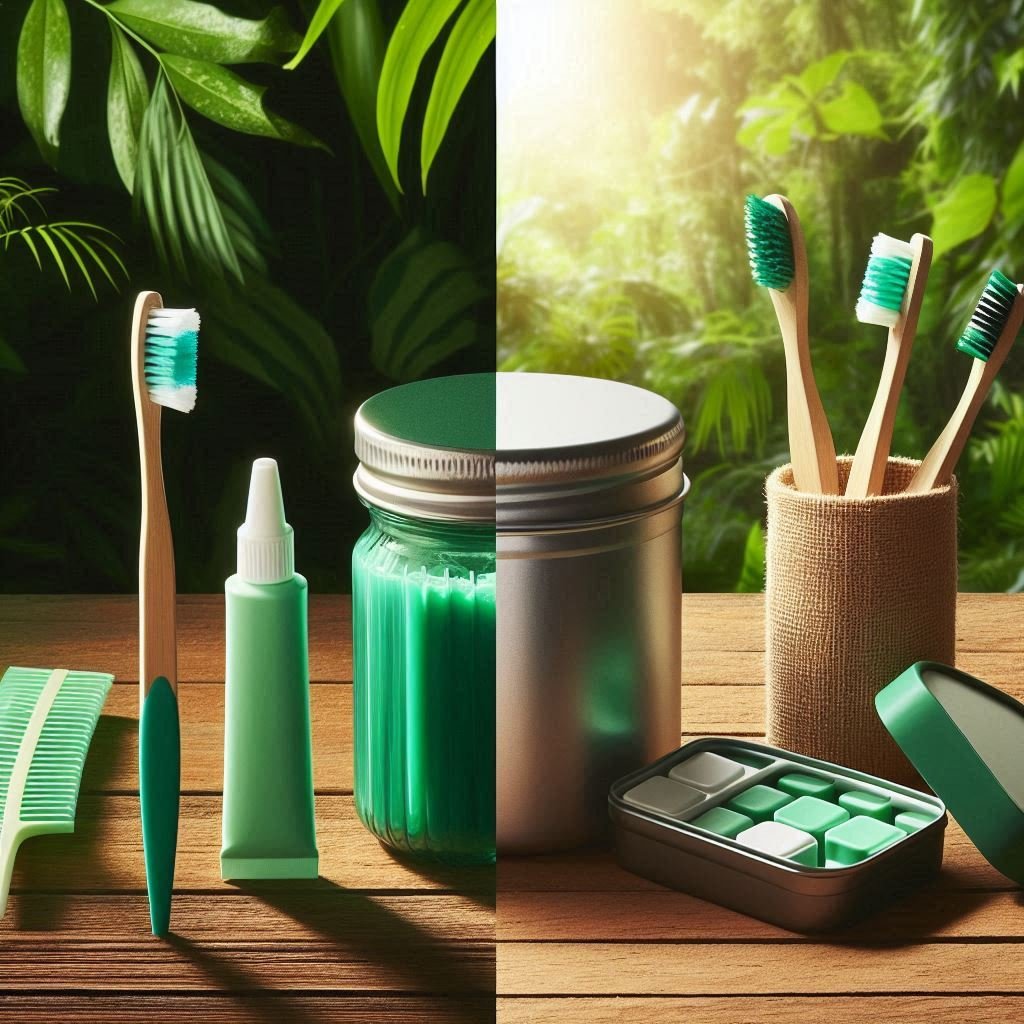
This includes switching to a bamboo toothbrush (much better for the environment than its plastic counterparts, and their biodegradability is hugely helpful), investing in eco-friendly dental floss (usually made from natural materials like silk or plant-based fibers – many options exist that don’t contribute more significantly to already alarming levels of landfills generated yearly globally), a reusable mouthwash dispenser that prevents buying small and disposable single use bottles after every refill (reducing single-use plastics!), or adopting the more convenient refillable versions which provides much improved overall functionality over other versions and are much improved designs over others).
I’ve experimented with different mouthwashes, too. Some contain additional artificial chemical components and/or excess artificial sweetener which I aim to actively reduce through choosing products more suited to my values, whereas those with other options available either contain entirely natural substitutes with significantly less negative side effects and additives or provide sufficient amount of flavoring without making one taste intensely minty (such is quite irritating personally) and has enough flavoring for such solutions while allowing usage on the whole mouth area in convenient methods. I’d find mouthwash particularly good to have as it can give a fresh feel. If anything, these kinds of products only enhanced one another positively when paired together. A simple solution for maintaining one’s overall personal health and daily well-being can result through creating a highly systematic, disciplined, and long-term routine using simple sustainable personal hygiene products. Ultimately it will allow the development and creation of habits built through consistency, adherence, and long-term adoption which allows for improved hygiene and self-care, as a whole, long-term and through multiple daily repetitions for improved well-being overall for both health and hygiene goals.
6. The Environmental Impact: Reducing Plastic Waste and Sustainable Packaging
The most compelling argument for adopting toothpaste tablets is their profound effect on reducing plastic waste. The shift to solid format drastically minimizes the plastic consumption found commonly found in mass-market product solutions today. This, on its own, provides a remarkable leap towards ecological efficiency and conservation for the planet. The reduced volume drastically lowers overall manufacturing waste resulting from large scale production, especially with conventional packaging used in many products today. Such solutions, in terms of logistics and production, would have vastly contributed to reducing excess waste when packaging are used for such commercially-manufactured product designs for the long term.
Reducing plastic usage greatly decreases the negative footprint these commercially available solutions would impose for a variety of manufacturing and shipping requirements. The ecological benefit here, beyond reducing environmental burdens associated with shipping logistics through bulk or large order volumes, further contributed to improved cost savings and reduction of various business related concerns, while having immense positive impact towards helping the environment globally as well. The manufacturing steps also improve resource utilization, while having less adverse outcomes on environmental and health related issues that result from mass commercial product solutions existing today. The impact to landfills, oceans, and general ecological impact can prove drastically effective with appropriate sustainable practices introduced today.
Beyond the tablets themselves, opting for brands with minimal and sustainable packaging further minimizes your impact. Many sustainable-focused brands take measures to optimize efficiency and design solutions that incorporate various eco-conscious choices. Choosing sustainably packed brands, beyond their core product solutions itself, serves as another excellent decision to reinforce that sustainability was indeed carefully placed at high priority during production decisions and when developing these kinds of brands that prioritized sustainability as a core value during various stages. These brands actively design using recycled materials whenever possible, ensuring packages consist primarily from fully-biodegradable paper-based boxes (to the degree of not requiring any sort of lining made from non-eco-friendly solutions like plastics commonly done by numerous industrial manufacturers today), or alternative packaging using alternatives for cardboard that greatly minimize ecological burdens or further reinforce sustainable goals as its core principle that motivates their choices of materials and various components in product designs and formulations for such products.
By opting for products that value sustainable practices that actively reduce such usage throughout entire product design and development phases, rather than introducing minor “eco-conscious changes” on already existing frameworks that merely appear or “give the impression” of caring and contributing to such initiatives whilst not sufficiently performing its intended effect significantly. Consumers often do not look too deeply into various manufacturing factors. When these considerations were made clear and known to those making purchasing choices it ultimately resulted in them contributing directly towards supporting environmentally conscientious companies through consciously making their choice to opt in to such commercially produced environmentally-friendly solutions that value sustainable solutions whenever practical and plausible to adopt.
7. The Cost Factor: Comparing Tablets to Traditional Toothpaste
One potential barrier to adopting toothpaste tablets is their cost. While this cost may be negligibly small or perhaps marginally different, at face value some would expect a significantly huge difference to the prices in such product comparisons; and this perception, in actuality is actually entirely inaccurate.
Comparing the overall price can also lead to very conflicting insights depending on your approach to cost considerations. There can be vastly different results whether one accounts for various influencing aspects like volume, usage duration, shipping logistics, and product longevity and expiry duration. If cost comparisons were to be approached based solely from comparing prices according to identical quantity of product in usage volume terms for instance; then significant differences could appear when comparing quantities.
However if quantity or volumes isn’t explicitly considered in price comparisons (which can be inaccurate, as volume of usages may vary dramatically!), and were the differences factored only based on usage costs over time per unit for a given period say (which seems highly inappropriate!), we may observe that price could often turn out much closer, negligibly different and actually comparable within very narrow percentage differentials that may often end up being rather negligible if other external variables are all accounted for or factored into the cost estimations as this ultimately determines which model seems to perform relatively better in overall value based price comparisons (accounting for aspects that matter, which influences outcome and decisions greatly, based on what one deems valuable based on individual values such as prioritizing convenience, effectiveness, or convenience; these may widely affect and bias consumer opinions in determining relative overall price differentials, in ways that cannot simply be generalized for every circumstance.
Often what results to higher initial unit product prices also ends up negligibly smaller per unit value over longer durations. Ultimately what seemed comparatively pricier when considered based on one single perspective based purely on price and volume could possibly shift in outlook whenever overall value and long term unit costs are evaluated properly which account for influencing aspects as well as differences such as long term value, relative costs incurred over period or duration when various aspects matter beyond pure price factors such as quantity volume which on their own don’t account fully towards overall considerations that determines total relative costs. The value perceived from individual user based consumption pattern may influence overall perceptions about costs when such other relative aspects matter such as practicality, relative values, suitability and relevance in daily usage and the amount and duration of relative values (how suitable and desirable it remains in prolonged usage over years rather than mere initial perceptions upon introducing them in one’s usage); it will help identify factors that may ultimately sway one to one choice or the other to meet various desired standards and desired characteristics to determine relative suitability. The decision may largely involve more aspects than simply prices that influences ultimately decision, therefore factoring this into comparisons may provide better overall relative cost valuation instead of merely observing solely only prices. Ultimately, one needs to perform and factor in various relevant aspect of user preferences, long-term practical considerations, and potential user experience as well when trying to perform product comparisons instead of comparing prices on isolated values to ascertain an informed decision and an accurately performing meaningful relative comparison.
Choosing what’s more important, sustainable materials or the value or pricing based purely only on relative quantities, requires self-reflection. When performing value assessments or performing cost comparisons you have to carefully factor many variables into performing a detailed comparison so it can be objective and give relevant useful insights to facilitate such crucial buying decisions. It remains crucial therefore that relative price analysis does involve careful examination before any buying decisions.
8. Frequently Asked Questions (FAQs) about Toothpaste and Mouthwash Tablets
Q: Are toothpaste tablets as effective as traditional toothpaste? A: Many brands are very effective. Proper usage is vital; completely dissolving the tablet and using effective brushing techniques is necessary. While certain kinds may offer additional value proposition beyond purely functionality; that can lead to significant and remarkable differences in oral care experiences and potentially better oral care and health.
Q: Do toothpaste tablets contain fluoride? A: Both fluoride and non-fluoride options are widely available; personal preferences determine whether fluoride or other alternative solution is better suitable and relevant for an individual; the choice largely remains up to each individual involved.
Q: Are toothpaste tablets suitable for children? A: Some tablets offer formulations targeted to children, often with a mild flavor and less stringent quantities; careful choice that carefully weighs safety, taste, user acceptance is necessary to determine which tablet remains most appropriate and which product choices proves ultimately satisfactory. It remains extremely crucial that necessary checks and consideration should not be overlooked especially whenever considering using them on children. Adult supervision is typically highly advised or strongly recommended for young children’s supervision.
Q: How much do toothpaste tablets cost compared to traditional toothpaste? A: It varies across different products, manufacturers and volume purchased; carefully performing relative price analysis while accounting for variable such as longevity (overall unit cost when accounting for factors such as longer relative durations for product expiry or overall usage), or factors such as total lifetime costs across variable (total costs of usage and longevity compared) and carefully accounting for variable such as overall user’s consumption usage habits will ultimately help determine such a value assessment or cost comparison with far improved clarity to reach a better result with lesser errors. The results of a direct price comparison depends heavily what variables and parameters which influence final comparisons.
Q: What is the best way to use toothpaste tablets? A: Wet your toothbrush and chew on a tablet completely. Make sure the tablet completely dissolves before brushing. Different brands may have minor instructions differing accordingly; but typically it should remain largely consistent overall.
Q: Are toothpaste tablets good for sensitive teeth? A: Non-fluoride, SLS-free tablets often are best suited to these circumstances; other variants do not necessarily meet this need therefore extra cautions should be done and special considerations needs to be performed when evaluating such suitability; and choosing appropriate variants matters accordingly as the suitability for use can vastly differ depending on individual’s circumstances; some additional measures are needed if needed beyond this scope such as requiring assistance, help from other professionals if more tailored solutions is sought in more customized scenarios; as well as consultation with appropriate dental professionals if one faces difficulties.
Q: What about travel with toothpaste tablets? A: These solutions make perfect portable alternatives with the advantage of significantly smaller and more portable size when packaged appropriately and effectively compared to bulkier solutions which are significantly larger than their relative counterpart in overall packaging, sizes and portability concerns during packing. This presents a clear advantage that is ideal for travel. These alternatives, in travel convenience alone already makes a stark and clear differences that vastly and undeniably superior relative to their mass commercially available conventional tube paste alternatives when compared against other factors that influence these selections, most notably convenience and reduced usage volumes when stored in carry bags which are widely desirable. The compactness vastly increases ease when transporting products from one location to another while keeping the overall contents safe from accidentally leakage of contents or unintended damage. The choice of making these are therefore largely appealing to users concerned about travel or other circumstances needing lighter and less cumbersome handling.
Q: Are there any drawbacks to using toothpaste tablets? A: While generally safe, certain users experience difficulty transitioning from using tubes to tablet based solution. Some users may initially perceive negative and undesired attributes. This does, however often depend on individual’s needs, priorities, circumstances and habits as well, hence careful personal considerations should not be excluded when performing self-analysis on suitability and relevance to this approach towards personal and health goals. Certain drawbacks depend completely what parameters which is being considered, evaluated and ranked on, with factors like long term costs, environmental aspects, convenience of use, longevity, packaging types and environmental friendliness for overall packaging; additional cost on long-term packaging, environmental concerns like landfills when comparing their mass packaging counterpart against this solid tablet options can be heavily biased by specific consideration to weigh, such biases if not explicitly made clear when comparisons, should raise potential issues of false or deceptive inferences with incorrect perception if other aspect which weigh significantly was either inadvertently missed or excluded inadvertently without stating such obvious fact clearly and explicitly in discussions. Hence explicit and clearly identified parameter comparisons is extremely highly advised whenever evaluating relative choices on alternatives; transparency ensures far more meaningful results of product comparisons in any evaluations.
Ultimately adopting toothpaste and mouthwash tablets provides numerous possibilities; some even extends to including reusable travel containers. Careful product evaluation by factoring user concerns as relevant is necessary before introducing into personal oral care and daily habit, in lieu of what works effectively, practically and suits personally with greater practicality in long-term goals and sustainability aspects which significantly weights in ultimate evaluation.